

Title: Local Ford Car Shows: How to Find and Prep for Events in Your Region
A good local Ford show rarely announces itself with a billboard. It appears in a club newsletter, a dealership service lane, or a Saturday morning parking lot where a row of Mustangs, Broncos, and F-150s has quietly taken over the far end. If you have been meaning to put your own Ford in the lineup, the path from spectator to participant is simpler than it looks. You need to know where the events live, how registration works, and what a realistic prep routine looks like.
This covers the whole loop: finding local Ford club events, signing up without surprises, and getting the car ready for a show-and-shine. No trailer queen required. Daily drivers, work trucks, and project cars all have a place.
Start With the Clubs, Not the Calendar
The most reliable event listings come from people who already show up. National clubs with regional chapters are the backbone of the local scene: Mustang clubs, Early Ford V-8 groups, Model A and Thunderbird clubs, F-100 and Bronco groups, and the many all-make clubs that welcome Ford owners. Find the chapter closest to you and bookmark its events page.
You can also find shows through:
- Dealership service departments and parts counters, which often post flyers for charity shows and customer appreciation days.
- Local speed shops, tire stores, chrome platers, upholstery shops, and parts stores.
- Facebook groups and regional car forums, where members share flyers and convoy plans.
- Cars and Coffee meets, which are informal but excellent places to ask what is coming up.
- Fairgrounds, auto museums, and high school or church fundraiser calendars.
If you are new, attend one event as a spectator first. Walk the rows, read the display boards, and ask owners how they heard about the show. You will leave with a short list of events worth entering.
Read the Event Flyer Like a Checklist
Not all shows work the same way. A cruise-in may have no classes, no judging, and no advance registration. A concours may require documentation and have strict rules about originality. A charity show-and-shine may be relaxed but run on a tight schedule. Before you register, confirm the basics:
- Event type: judged, participant-voted, exhibition-only, or cruise.
- Class list: stock, modified, unrestored, daily driver, truck, muscle, special interest.
- Registration: online, mail-in, or day-of. Note the deadline and arrival window.
- Cost and payment: what the flyer asks for and whether it supports a charity.
- Logistics: trailer parking, room for chairs and coolers, pets, kids, and rain date.
Registration forms usually ask for year, make, model, trim, engine, color, license plate, and sometimes the VIN. Have those details ready. Keep your confirmation email or receipt in the car. If you register on the day of the event, arrive early, follow the marshal's directions, and expect a short line.
If your Ford is registered as a historic vehicle, has collector insurance, or arrives on a trailer, read the fine print before you pay. Some events require proof of registration or coverage to enter a stock or original class, and a few push trailers to a separate lot well away from the show field. Know which gate you are supposed to use. It is a small detail that turns a calm morning into a stressful one if you learn it at the entrance.
It also helps to know what the entry fee actually buys. A $20 show-and-shine fee typically covers a dash plaque, a spot on the grass, and a raffle ticket. A $75 judged entry may include a class trophy, a goody bag, and a lunch voucher. Neither is a better deal, but they attract different crowds, and you should pick the one that matches how you want to spend the day. If you are unsure, call or email the contact on the flyer. Organizers are almost always volunteers who would rather answer a question now than sort out a problem at 7 a.m. on show day.
Get the Car Ready: A Realistic Prep Plan
Most first-timers over-prep the paint and under-prep everything else. Judges, and the people who stop to look, spend a surprising amount of time on the parts you never think about. Here is a workable schedule that fits around a normal job.
Two Weeks Out
Wash the car, then walk it slowly with a notepad. List everything that bothers you: the missing trim clip, the sagging corner of a headliner, the burned-out license plate bulb, the cracked vacuum line that makes it idle rough. Order those parts now, not the Thursday before. If you are entering a judged class, read the class rules today so you are not making changes you will have to undo.
The Week Of
Do the real work in this order: wash, decontaminate with a clay bar or iron remover, polish, then seal or wax. Clean the glass inside and out, because people look through windshields to see interiors. Give the wheels and wheel wells the attention they deserve; they are the most commonly skipped surfaces on a show field. On the interior, vacuum everything, scrub the mats, and treat the dashboard with a matte product. Glossy silicone dressings reflect sunlight and make a clean interior look cheap.
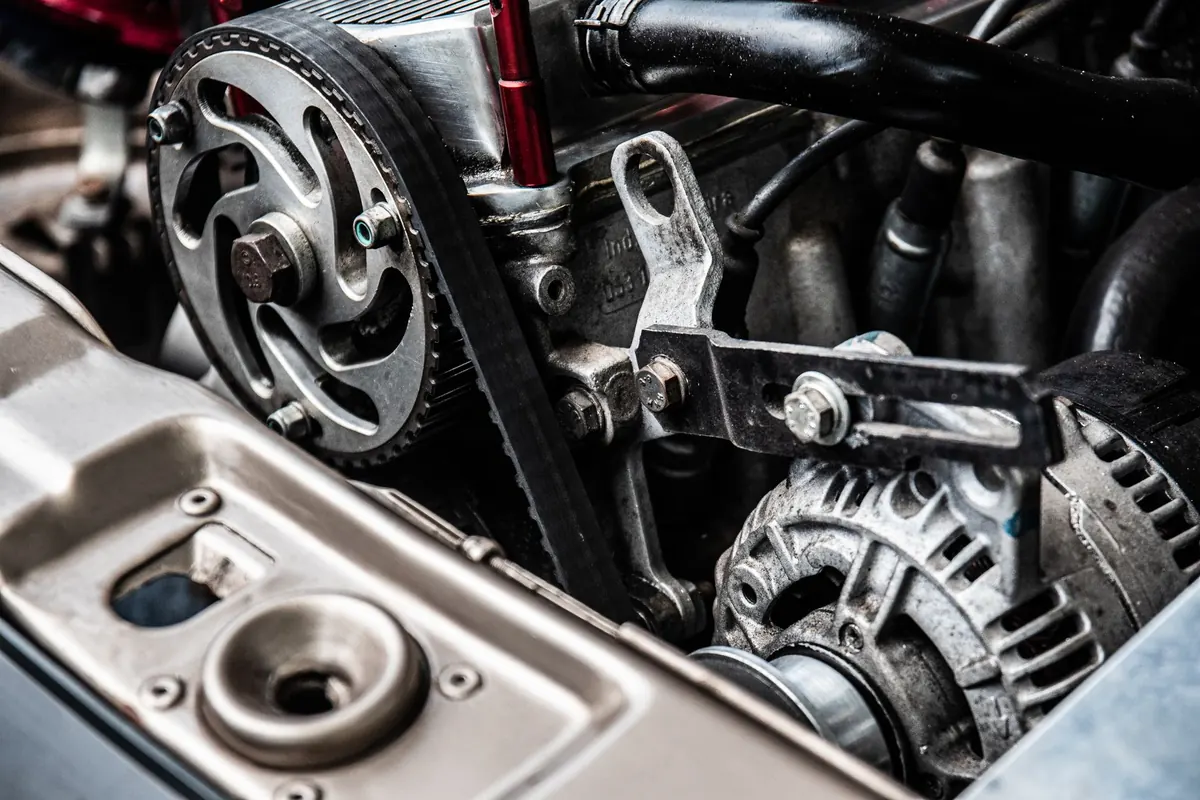
Under the hood, aim for honest and tidy rather than glossy. A wiped-down engine bay with clean hoses and no leaves in the cowl reads better than a greasy bay hiding under a layer of shiny plastic dressing. If your truck is a working truck, leave the work evidence alone. A bed with honest scratches tells a better story than one that has clearly never carried anything.
The Night Before
Wash the car in shade or in a garage and dry it thoroughly. A driveway wash at three in the afternoon leaves water spots that look like haze under the harsh light of a show field. Load the car with folding chairs, a cooler, sunscreen, hats, water, microfiber towels, a quick detailer spray, glass cleaner, and your registration confirmation. Charge your phone. Park the car inside if you have the space, and go to bed early. Arriving at 6:30 a.m. already tired is the fastest way to stop enjoying your own show.
Show Day: Arrival, Judging, and Etiquette
Show up early. The shady spots, the end-of-row spaces, and the spots near the food truck all go to the people who arrive during the first hour. Follow the marshal's directions exactly, even if the spot they give you is not the one you wanted. One registered car gets one space. Tents, canopies, and open coolers sprawled into the next spot annoy the people who paid the same fee you did.
If your class is being judged, stay near the car. Judges often have questions, and an owner who can explain a rare option or a period-correct part usually gets a fairer shake than one who is off at the swap meet. At club-level shows, judging is friendly and quick. A judge may spend two to five minutes on your car, so the details that count are the ones that are easy to see close-up:
- Door jambs, trunk gutters, and the underside of the hood.
- Wheel wells, lug nuts, and brake calipers or drums.
- Seat tracks, pedals, and the seams of the upholstery.
- Glass edges, badges, grille slats, and the spare tire well.
- Panel gaps, correct fasteners, and whether the paint matches in natural light.
A clean daily driver with honest wear will almost always score better than a neglected car wearing expensive wheels. Judges are reading care, not catalog price.
A few house rules make the day better for everyone. Do not touch another person's car, do not lean on it, and keep kids and pets close and supervised. Do not pack up before the awards if you registered in a class; leaving early is read as a snub by the volunteers who organized the event. And if someone asks about your car, answer them. That conversation is how you end up on the mailing list for next year's show.
The first event is the hardest one to commit to. After that, you know the flyer vocabulary, you know how long prep really takes, and you know a dozen people by first name. Bring a friend with a Ford, split the cooler, and make it a routine. The local scene stays alive because owners keep showing up, and the fastest way to become one of those owners is to register for the next show on your list.
Photo: Daniel Ellis / Pexels
Related posts
More stories you’ll love reading