



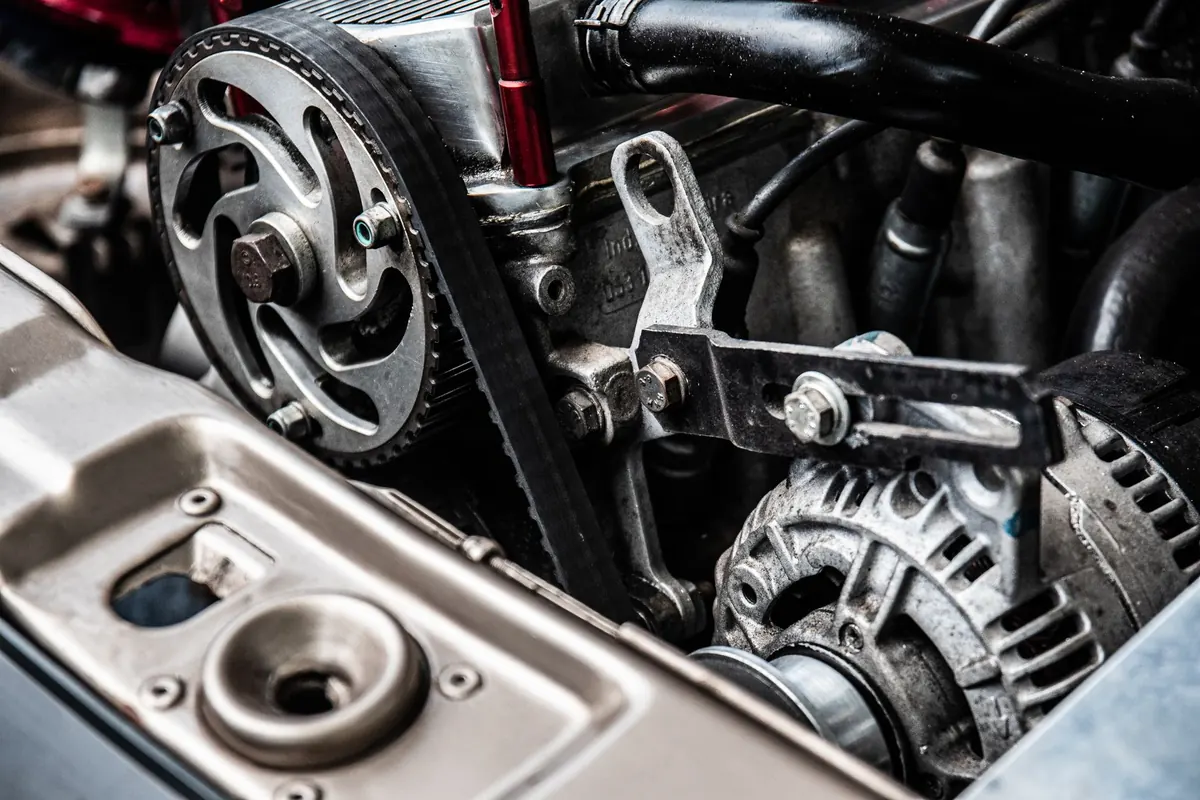
The 4.6L Modular V8 is one of the most accommodating engines Ford ever put in a production vehicle. It moved Crown Victorias, Grand Marquis, Town Cars, F-150s, Explorers, and Mustang GTs for close to two decades, and its oil change is about as simple as V8 maintenance gets: one drain plug, one spin-on filter, five or six quarts, and very little plastic to wrestle with. On ramps, the whole job runs thirty to forty-five minutes. The steps below apply to every version of the engine, from the two-valve truck and sedan mills to the three-valve and four-valve variants.
Tools and Supplies
- Oil: five to six quarts of the viscosity listed on your filler cap (more on that below)
- Filter: Motorcraft FL-820S fits most 4.6L applications
- Drain pan rated for at least seven quarts, plus a funnel
- 13 mm or 15 mm socket for the drain plug — check yours before you drain anything
- Oil filter wrench (cup or strap type)
- Ratchet, extension, and a torque wrench
- Ramps, or a jack and two jack stands, plus wheel chocks
- Nitrile gloves, shop towels, and a piece of cardboard
- A replacement drain plug gasket if your plug uses a separate one
Capacity, Viscosity, and Filter Choice
How much oil
Most two-valve 4.6L engines — the ones in Crown Victorias, Grand Marquis, Town Cars, and 1996–2004 Mustang GTs — take five quarts with a filter change. The three-valve 4.6L found in 2005–2010 Mustang GTs and the 2009–2010 F-150, along with the four-valve DOHC engines in Cobras, Mach 1s, and Lincoln applications, generally take six. Confirm the number in your owner's manual before you pour, and then use the dipstick as the final authority. Add roughly half a quart less than the listed capacity, run the engine, let it settle, and top off to the full mark.
Which viscosity
For most 4.6L engines built from roughly 2000 onward, Ford specifies 5W-20. Earlier examples often called for 5W-30. If the two disagree, follow the cap. Beyond that, a synthetic blend is more than adequate, and a full synthetic is a reasonable upgrade if you routinely tow, idle in traffic, or stretch your intervals. There is no need to chase boutique oils for a stock modular V8.
The filter
The FL-820S is the standard fitment across nearly the whole 4.6L family. Buy a quality filter and skip the two-dollar specials — this engine's timing chain tensioners rely on oil pressure at startup, and a filter with a weak anti-drainback valve can contribute to a brief rattle on cold mornings.
Step-by-Step
- Warm the engine for a few minutes. Warm oil carries suspended contaminants out of the pan better than cold oil, and the filter breaks loose more easily. Five minutes of idling is plenty. Shut it off before you crawl underneath.
- Lift and support the vehicle. Ramps are quickest. If you use a jack, set it under a proper lift point and put jack stands under the front subframe or frame rails. Chock the rear wheels, set the parking brake, and never work under a car held up by a jack alone.
- Find the drain plug. On the 4.6L, it sits on the driver's side of the oil pan, usually pointing down or slightly rearward. Slide the drain pan underneath before you touch it.
- Drain the oil. Break the plug loose with your socket, keep light pressure against the pan as the last threads release, then pull the plug away quickly. Let it drain for ten to fifteen minutes. Inspect the plug — if it uses a separate gasket and the gasket is flattened or cracked, replace it.
- Remove the old filter. The filter location varies. On rear-drive cars it hangs off the driver's side of the block, low and slightly angled. On Explorer and Mountaineer applications it tucks behind the front bumper area and is easiest to reach with the front wheels turned. Position the drain pan under it, break it loose a quarter turn with the wrench, then spin it off by hand. Expect a spill, and check that the old gasket came off with the filter.
- Prep the new filter. Wipe the mounting surface clean with a rag, then smear a film of fresh oil on the new gasket. If the filter mounts vertically, pre-filling it partway is helpful; on the 4.6's angled mount, just oil the gasket and move on.
- Install the filter. Thread it on by hand until the gasket contacts the block, then turn it another three-quarters of a turn. Never use a wrench to tighten a filter.
- Reinstall the drain plug. Thread it in by hand first to avoid cross-threading, then torque it to spec.
- Fill the engine. Add your oil through a funnel, starting about half a quart short of capacity. Start the engine and watch for the oil pressure light to go out immediately. Let it idle for thirty seconds while you look for drips at the plug and filter.
- Check the level. Shut the engine off and wait five to ten minutes so oil in the upper engine drains back to the pan. Pull the dipstick, wipe it, reinsert, and read it. Top off until you reach the full mark. Add in half-quart increments; these engines do not like being overfilled.
- Clean up and reset the monitor. Wipe up spills so they do not burn off on the exhaust later. Pour the used oil into a sealed container and take it to an auto parts store or municipal household hazardous waste site. If your truck or Mustang has a message center, cycle to the oil life display and hold the reset button.
Check the dipstick twice: once five minutes after shutdown, and again the next morning before you start. The cold reading is the one to trust if you want the level precise.
Torque Specs
- Oil pan drain plug: 15–22 lb-ft (20–30 Nm). Ford's figure for most 4.6L pans lands around 19 lb-ft. Snug is the goal, not immovable.
- Oil filter: three-quarters of a turn past gasket contact, by hand only.
- Drain plug socket: commonly 13 mm or 15 mm. Verify before draining so you are not hunting for the right tool with oil running down your arm.
Mistakes That Cost You Later
Overtightening the filter is the most common error. It crushes the gasket, makes the next removal a fight with a chisel, and can weep oil onto the exhaust. Leaving the old filter gasket stuck to the block is the second most common, and it produces a double-gasket seal that will dump several quarts onto the ground in short order. Always run a fingertip around the mounting surface and confirm it is bare metal.
Two more worth naming: forgetting to check the level after the first start, and overfilling because the manual said six quarts and you assumed the pan was empty when it held half a quart. Both are easy to avoid with a dipstick and a little patience. Finally, do not skip the leak check — start the engine, look under the car, and only then lower it off the stands.
Keeping the 4.6 Healthy Between Changes
The modular V8 has a relatively small sump for its displacement, so oil quality degrades faster than it does in a big-block truck engine. A 5,000-mile or six-month interval with a quality filter is sensible for most drivers; 3,000 miles still makes sense if you tow, idle in heavy traffic, or make a lot of short cold trips. Check the level every couple of fuel stops. Valve cover gaskets, the rear main seal, and the oil filter adapter are
Related posts
More stories you’ll love reading